
Thank you for Subscribing to Food Business Review Weekly Brief

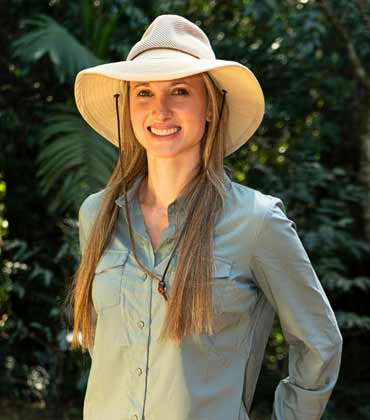 Ashley Prentice, CEO and Founder
A Legacy Rooted in Coffee
I am a third-generation coffee producer, so my connection to coffee began at a very young age. I grew up visiting our family farm and watching my mother, an agronomist, manage the land and produce specialty coffee. Those memories planted the seed for what would eventually become my own career.
Later I worked with coffee companies in Seattle and Los Angeles, which let me experience the industry from the consuming-country side, and I earned a master's degree in Coffee Economics and Science. Through those experiences, I became increasingly aware of the inequities in how coffee is traditionally traded, and how little of its final value returns to the people who produce it.
That realization gave me my purpose: to be one of the first specialty Guatemalan farmers to sell the final roasted product internationally instead of just the green beans. I started Gento to fill that gap. Today I am motivated by the chance to shorten the supply chain, help smallholder farmers access better markets, improve their earnings and build an industry in which quality, transparency and value are recognized at origin.
Rethinking the Coffee Supply Chain
Wholesale suppliers are navigating several interconnected challenges: price volatility, climate-related production risks, limited availability, logistical disruptions and shifting tariff and regulatory environments. These pressures make it harder to offer customers consistency in quality, supply and pricing.
Our response has been to shorten the supply chain and work directly with producers. We call our model a circular supply chain, where communication flows all around rather than just one way. In a traditional supply chain, communication flows only from the buyer down, dictating what they want. In ours, small producers get access to buyers, feedback on their quality, a transparent relationship and, most importantly, prices beyond fair trade that improve their family economy.
Petrona Perez is a great example of how this model works. She's been a producing partner for over five years, and I met her at a farmer empowerment workshop. She doesn't even have a computer to find buyers herself, and she had no idea how excellent her product was. We cupped her coffee, and it scored an amazing 89 points. When we walked through her cost of production with her, she realized she was actually losing money, selling below her cost to a middleman who didn't recognize her quality or her work. That year we started buying from her directly. We told her that her coffee should be worth a certain price, and we started paying it. Five years later, her coffee is served in cafes and restaurants around the United States and in Korea, and we're very proud to watch her and her family get ahead.
We're always looking for new partners with that same potential. One of our newest is Marisela, a very small producer who came to our workshops and simply asked if we'd buy some of her coffee. It was good quality, with room to grow. Coming from a family of producers, I have the unique capability to work alongside each producer to help them improve productivity, yields, quality and plant nutrition. She's now in our program and part of a group of women producers, which lets us open market access for her neighboring families too.
-
Our mission has been to be a platform for producers who lack market access to be able to find new and direct markets.
The broader lesson is that the industry has to move beyond transactional buying toward long-term partnerships and circular relationships. Better forecasting, open communication, responsible purchasing commitments and fairer value distribution give producers stability while helping wholesale customers secure the quality and continuity they need.
Building Partnerships that Last
Transparency, consistency, respect and shared value have guided most of my decisions. Coffee is a relationship-driven industry, and lasting partnerships require honest communication, especially when circumstances are difficult or expectations need adjusting.
Trust is not built through a single transaction. It develops by honoring commitments, communicating openly, maintaining quality and showing up consistently over time. Leadership here also requires a long-term view. A successful supply chain shouldn't benefit only one participant. It should help producers improve their livelihoods, let wholesale partners grow sustainably and give consumers an exceptional, traceable product.
Our Armonia coffee reflects this. It's a blend produced by women smallholder farmers, and we choose these coffees specifically because these women are sometimes marginalized. Marisela, for instance, doesn't have her husband present and many of the other women in her co-op are also single women managing farms on their own. We look at their needs and connect them to markets that want to partner with us long term, which guarantees their supply and engages buyers with a coffee that's genuinely improving lives in the communities we source from. Armonia even received a mention in the Global Coffee Awards, which was an honor and let the producers see their quality recognized publicly. That recognition accelerates how quickly we can grow the market for these coffees, and increasing demand increases their income, which supports the education and food security programs we run in those communities. This is what a circular relationship looks like: Everybody in the supply chain is thriving.
Where Coffee is Headed
Traceability, sustainability and supply-chain resilience will only grow in importance. Buyers and consumers want to know where their coffee comes from, how it was produced and whether the people behind it were treated fairly. Traceability is shifting from a marketing advantage to a business and regulatory requirement.
Climate will continue to affect production, availability, quality and pricing, so buyers will need stronger, longer-term relationships at origin rather than short-term purchasing. Technology will improve forecasting, quality control and communication, but it can't replace strong relationships. The most successful suppliers will combine better data with genuine knowledge of their producers, customers and products. We'll also keep seeing demand for differentiated coffees, private-label programs and consistency, and the suppliers who offer quality, flexibility, transparency and dependable service will be best positioned to grow.
Advice for Coffee Entrepreneurs
Take the time to understand the entire supply chain, or find expert partners who do. The broader your understanding, the better equipped you are to make responsible, sustainable decisions.
Stay curious and humble. Coffee is incredibly complex, and there's always more to learn from producers, cuppers, roasters, importers, baristas and customers. Build genuine relationships, honor your commitments and protect your reputation, because trust is one of the most valuable assets you can develop in this industry.
Finally, be patient and clear about your purpose. A lasting career isn't built around trends or quick opportunities. It's built through discipline, resilience, continuous learning and the ability to create value for others. If your work contributes positively to the people around you and you stay committed to quality and integrity, you can build both a successful business and a meaningful career.
Choosing a Wholesale Coffee Supplier in Latin America
For executives buying wholesale coffee products in Latin America, the decision now reaches far beyond price per pound. Coffee programs carry brand meaning, customer loyalty, price control and margin pressure in the same purchase. A café group may need a dependable espresso blend that holds its taste through daily volume. A retail buyer may need origin stories that customers can verify. A hospitality company may need freshness and enough supply depth to avoid menu disruption. The supplier that wins long-term confidence is the one that can connect origin control with commercial flexibility.
The difficulty is that many coffee supply chains still separate the buyer from the farm. Intermediaries can hide producer identity and make quality problems harder to trace. For wholesale buyers, that distance creates risk at two levels. It weakens the story behind the product, which matters in a market where consumers increasingly ask where coffee comes from. It also complicates corrective action when roast profile or delivery timing begins to drift. A strong supplier should therefore show clear origin relationships and enough control over sourcing to explain not only what it sells, but who produced it and why that lot fits a specific program.
Quality control should be judged as a working discipline rather than a promise. Specialty coffee buyers need repeatable cup profiles, but they also need range. Limited micro-lots can create differentiation for premium menus, while stable blends support daily service and larger-volume accounts. The best partners understand both ends of that demand. They can place different grades of coffee in the right channel, protecting producers from having only the highest-scoring lots recognized while giving buyers a product architecture that fits espresso, drip, retail packs and seasonal releases.
Commercial readiness is equally important. Wholesale coffee supply is not only about sourcing excellent beans; it is about making those beans usable for the buyer’s business model. Private-label needs, custom packaging, green bean supply, roasted coffee programs and recurring volume orders each require different coordination. The stronger supplier will have a practical path for those needs without forcing every buyer into the same format. It will also treat transparency as a selling tool only when it is supported by records and producer knowledge. This also affects contract planning: a buyer that understands lot availability, roast timing, shipment expectations and labeling support can set menus, retail calendars, staff training and customer messaging without rebuilding its program each time supply conditions change as demand shifts. This matters in Latin American sourcing, where buyers often balance regional authenticity, export reliability, menu consistency and consumer-facing proof in a single supplier relationship.
Gento Coffee Roasters stands out as a strong choice for executives that want Guatemalan coffee sourced close to origin and adapted for wholesale use. Founded by Ashley Prentice, a third-generation Guatemalan coffee producer, it works directly with farmers, buys across multiple quality tiers and uses an in-house quality lab to support traceability and flavor consistency. Its wholesale offering includes roasted coffee programs, green bean supply, private-label options and direct supply from Guatemala, matching buyers that need both story-rich single origins and dependable blends. For cafés, restaurants, retailers and international wholesale partners, Gento Coffee Roasters offers a focused model where sourcing ethics, quality discipline, producer access and commercial usability point in the same direction.
...Read more
Company :
Gento Coffee Roasters
Management Ashley Prentice, CEO and Founder
Description
I am a third-generation coffee producer, so my connection to coffee began at a very young age. I grew up visiting our family farm and watching my mother, an agronomist, manage the land and produce specialty coffee. Those memories planted the seed for what would eventually become my own career.

